Bedding is sold in a grid. Every sheet set, duvet cover and quilt comes in a range of bed sizes, and each size comes in several colors. That grid is why bedding stores so often show a product as "available" while the combination a shopper needs is sold out. A back-in-stock alert on a bedding product page lets a shopper reserve their place for that exact square of the grid. This post covers size and color matrices, sets, considered purchases and seasonal shades, and how each affects restock alerts. It avoids invented statistics, because we have not found reliable published data on restock alerts for home textiles.
The Size and Color Matrix
A sheet set in four bed sizes and six colors is 24 variants, and each sells at a different speed. The most common bed size in a best-selling neutral usually goes first, while less common sizes in seasonal colors can sit for months. A shopper who needs a king fitted sheet cannot use a queen, and someone matching an existing duvet cover will not switch colors.
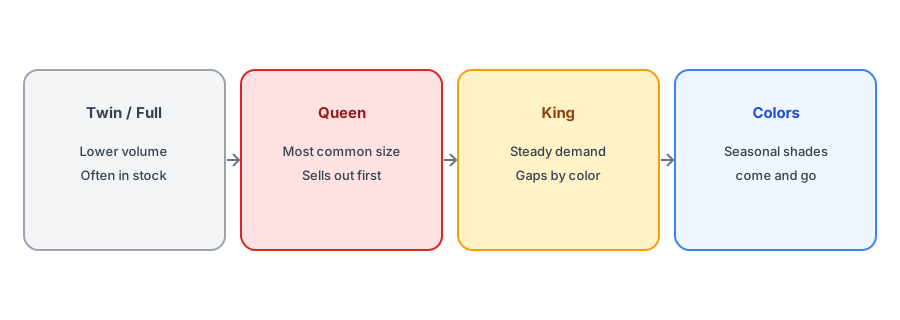
This makes variant-level alerts the baseline for a bedding restock notification. Griffin ties each signup to the size and color the shopper selected and only emails them when that exact variant returns. Where sizes differ between markets, for example a "double" in the UK and a "full" in the US, make sure variant names are clear in both the form and the restock email so shoppers know what they signed up for. Our guide to size runs in apparel covers similar size-grid issues.
Sets, Separates and Partial Stockouts
Bedding is sold both as sets (a fitted sheet, flat sheet and pillowcases) and as separates. When a set is built from the stock of its parts, one missing pillowcase can take the whole set off sale. Shoppers then see a sheet set size waitlist form for a set whose main pieces are on the shelf.
- If you sell separates, link to them from a sold-out set so shoppers can buy what is available now.
- Keep a separate Notify Me form on the set for people who want the bundled price or the matching packaging.
- Restock the missing part promptly, because one small item can block sales of much larger ones.
Our guide to bundles and multi-component products explains how component stock affects set availability.
Let shoppers sign up for the exact bed size and color they need. Griffin is free to start.
Install Griffin on ShopifyConsidered Purchases Take Time
Bedding is not usually an impulse buy. People compare fabrics, weaves and thread counts, order swatches, read reviews and sometimes wait for a sale. A mattress topper out of stock in the size they finally chose is a frustrating end to that research. Two things follow:
- Keep requests active. A shopper who researched for two weeks will often wait several more for the right size. Do not expire requests too quickly on core products.
- Make the email specific. Name the product, size, color and material, so the shopper recognizes what they chose without opening the page.
If you offer fabric swatches, a shopper may decide on a color days after ordering them. Make sure the product page they return to shows the sold-out state clearly and offers the Notify Me form for the exact variant.
Seasonal Colors and Weights
Many bedding brands release seasonal colors and switch between lighter summer fabrics such as linen or percale and warmer winter ones such as flannel. A seasonal shade may not return, and winter-weight bedding may not restock until the next cold season. Be honest on the page: "This color was a limited release" or "Flannel returns each autumn" sets expectations better than a silent sold-out label. For colors that will not return, suggest the closest current shade, as discussed in our guide to matching alternatives on sold-out pages.
Using Signups to Plan the Grid
The size and color grid makes ordering hard, because you have to guess how many of each combination to buy. Home textiles notify me signups are a direct signal: if 40 people are waiting for a queen set in one color and nobody is waiting for the twin in another, that should shape your next order. Our guide to tracking demand for sold-out products explains how to read signup counts, and our reorder point and safety stock guide helps you keep popular combinations from running out again.
Writing the Restock Email
Put the size and color in the heading, show a photo in the right color, mention the fabric and link directly to the variant. If the restock is small, say so. If the shopper's size is back but the matching pillowcases are not, say that too, so they are not surprised at checkout.
FAQ
Why do bedding stores need variant-level alerts?
Because bedding sells out one size and color combination at a time. Alerts should only fire when the exact variant a shopper chose returns.
Should bedding sets and separates have separate alerts?
Yes. Sets can become unavailable when one piece runs out, so link to separates and keep a form on the set itself.
How long should bedding restock requests stay active?
Longer than for impulse products. Shoppers who researched carefully will often wait for their size.
What should a bedding restock email include?
The product, size, color and fabric, a photo in the right color and a direct link to that variant.
The Bottom Line
In bedding, a good restock alert is about one square of the size and color grid, delivered clearly to a shopper who has already done their research. Griffin handles variant-level alerts for Shopify, and you can install it free from the Shopify App Store.